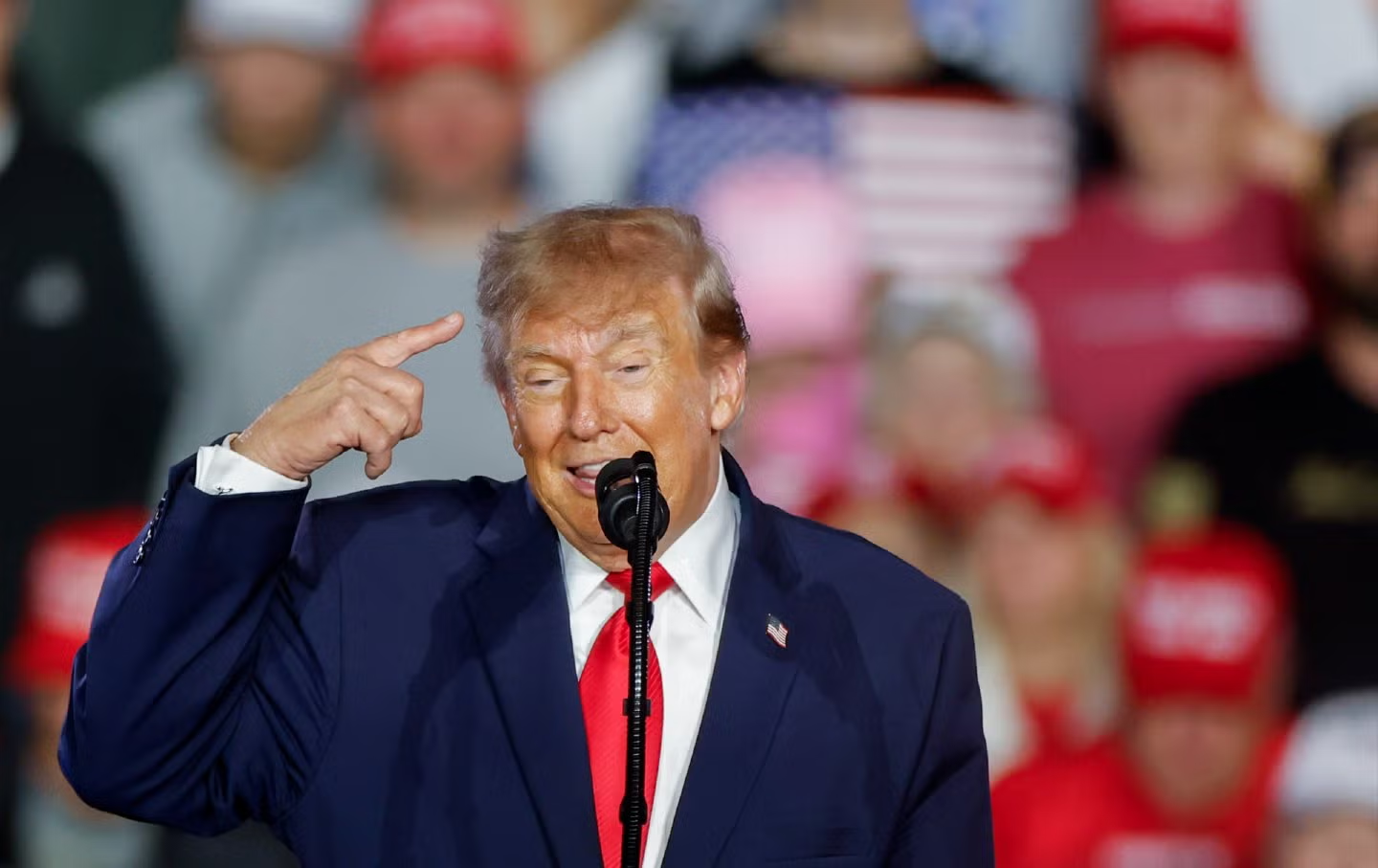
As the 2026 midterm election cycle reaches its final sprint, the traditional arena of the mass political rally is showing signs of deep wear. What was once the primary engine of populist momentum now increasingly resembles an act straining to maintain its audience's attention. On the campaign trail in Midwestern battlegrounds, the contrast between high-octane stage production and the immediate concerns of voters has exposed a widening gap between national political figures and the electorates they aim to mobilize.
In venues across the region, long-standing campaign routines are meeting audiences whose patience appears to be wearing thin. Event schedules plagued by protracted delays leave crowds waiting through repeated arena music playlists before candidates take the stage. While diehard supporters still fill seats, observers and attendees alike have noted a palpable shift in energy. The familiar roster of broad grievances, personal digressions, and attacks on political opponents no longer carries the novelty or force it possessed a decade ago.
The Disconnect Between National Rhetoric and Local Realities
For many voters, the central issue is not the theatrical performance on stage, but the absence of solutions for immediate economic and environmental pressures. In key Midwestern agricultural states, local communities are grappling with rising costs for essential supplies like fuel and fertilizer, driven in part by ongoing foreign policy conflicts. At the same time, regional debates over public education funding, water quality, and public health remain acute.
Rather than addressing these pressing state-level challenges, national figures often adhere to a rigidly fixed set of talking points. Campaigns frequently rely on pre-recorded media supercuts highlighting culture-war flashpoints or immigration rhetoric. However, the appetite for these canned presentations seems to be waning among attendees who traveled to hear direct solutions to their daily struggles.
During recent events, attendees in upper arena tiers could be seen drifting toward the exits well before the keynote speeches concluded. When campaign messaging strays into long windups on tangential topics or self-congratulatory anecdotes, even sympathetic listeners begin to lose track of the core message.
Shifting Instincts and Evolving Voter Dynamics
Political analysts watching the 2026 midterms point out that the strategies which redefined electoral politics years ago may no longer align with current public sentiment. Commentators reflecting on past election cycles note that early populist appeals succeeded because they tapped directly into widespread economic frustration and skepticism of established political norms.
"He also seemed to have some sort of good political instincts in 2015/16. Him shitting on the Iraq War in the 2015/16 republican primary was good. Him going after Hillary for Iraq and NAFTA also was good.
But his instincts started to slip in 2020 when he ran as a 'law and order' candidate as an incumbent."
This sentiment highlights a broader issue facing campaign strategists: a style built on continuous disruption struggles to maintain its efficacy when transposed onto the realities of governing during complex economic headwinds. When candidates rely heavily on replaying past grievances rather than presenting a forward-looking vision, they risk alienating voters who are seeking pragmatic leadership.
Longtime residents of conservative rural districts have expressed surprise at how resilient the appetite for grandstanding has been, even as traditional Midwestern pragmatism pushes back. One regional observer recalled growing up in an environment where voters historically valued straightforward, plain-spoken governance:
"...even then there was a sort of midwestern common sense that rejected this kind of flim-flammery and saw through this big-city nonsense."
A Midterm Landscape in Flux
As state and local candidates attempt to carve out winning coalitions in suddenly competitive battlegrounds, many are finding it necessary to distance themselves from national campaign scripts. Down-ballot nominees are increasingly forced to address localized crises—such as agricultural input costs and environmental regulations—to remain competitive against upstart challengers.
When national political figures use precious stump time to revisit personal scores or focus on vanity projects while key policy issues hang in the balance, it leaves voters questioning the focus of their leadership. Reflecting on the frustration over misplaced campaign priorities, one voter observed:
"I care about the US economy, the global economy, the Iran war, affordable health care, taxes, and other interesting and impactful things..."
With election day looming, the final rallies of the 2026 midterms suggest that the political landscape is entering a transitional phase. Whether the spectacle of the mega-rally can continue to drive voter turnout—or if voters will demand a return to concrete policy discussions—remains one of the defining questions of this election season.

