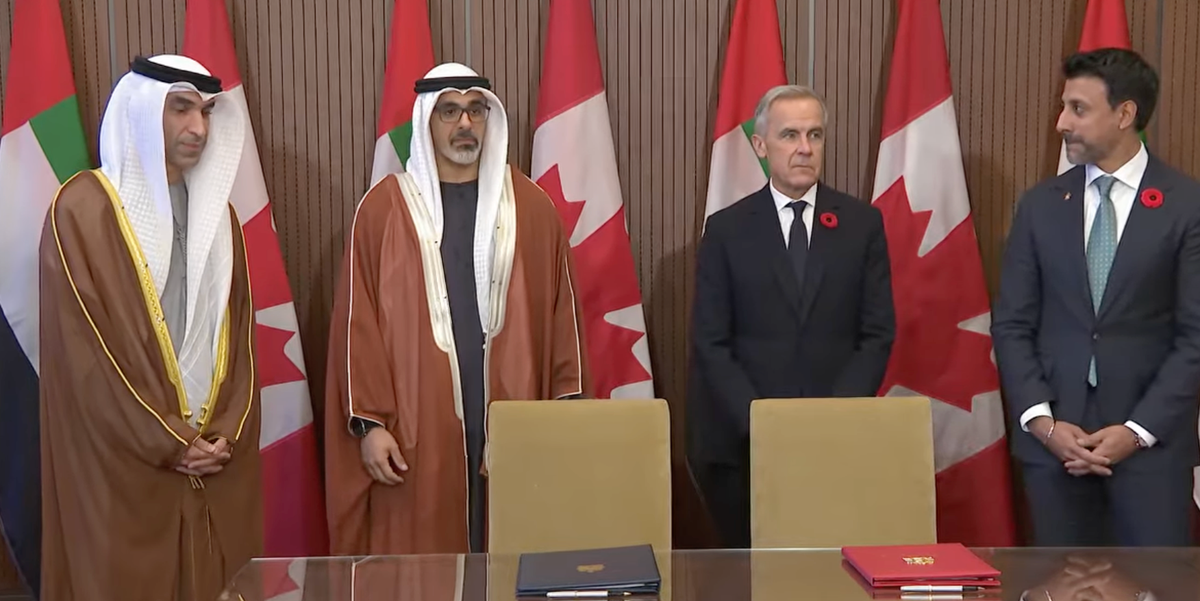
Canada has expanded its diplomatic and security footprint in the Middle East by signing a new memorandum of understanding (MOU) to deepen military cooperation with the United Arab Emirates. The agreement was finalized in Ottawa during an official ceremony featuring senior officials alongside Abu Dhabi Crown Prince Sheikh Khaled bin Mohamed bin Zayed Al Nahyan.
According to official statements, the newly executed defense agreement builds upon an earlier security pact originally signed in 2017. A government spokesperson noted that the updated MOU establishes a formalized framework intended to enhance military cooperation, defense engagement, joint training, and strategic information sharing between the two nations. Official records show that Canada exported approximately $10.4 million in military goods to the UAE in the preceding year.
Broadening Economic and Diplomatic Ties
The security agreement is part of a broader diplomatic effort to solidify bilateral relations between Ottawa and Abu Dhabi. Alongside the military framework, the two nations signed the Canada-UAE Comprehensive Economic Partnership Agreement (CEPA), following a rapid negotiation period lasting just 47 days. The Prime Minister's Office emphasized that the trade deal is designed to expand commercial opportunities, strengthen economic ties, and foster long-term financial growth for both countries. Additional MOUs covering diplomatic relations and energy cooperation were also concluded during the bilateral summit.
The diplomatic push comes amid ongoing global geopolitical shifts, with Canada seeking to solidify ties across the Gulf region while aligning closely with international partners on security matters.
The Regional Context and International Scrutiny
The timing of the bilateral agreements has drawn attention due to the ongoing humanitarian crisis in Sudan, where fighting between rival military factions has displaced millions and led to widespread civilian casualties since early 2023. International observers, human rights organizations, and diplomatic bodies have repeatedly raised concerns regarding external backing for the Rapid Support Forces (RSF), a paramilitary group central to the conflict.
Reports from international monitoring groups allege that the UAE has provided financial and logistical support to the RSF. Analysts suggest that interest in the region is tied to commercial and strategic assets, including control over gold mining operations, agricultural investments intended to support food security, and access to key shipping ports along the Red Sea coastline. The UAE has consistently denied allegations of direct involvement or supply of military hardware to the warring parties in Sudan.
In early 2025, Sudan brought a case before the International Court of Justice (ICJ) accusing the UAE of complicity in actions connected to the conflict. The ICJ ultimately dismissed the application, concluding that it lacked the necessary jurisdiction to issue provisional measures against the Gulf state in that specific proceeding. Despite the dismissal, human rights organizations continue to document humanitarian violations and press for international accountability across the region.
Balancing Diplomacy and Ethics
The contrast between economic engagement and global human rights concerns has sparked debate regarding the principles guiding international security partnerships. While official policy continues to call for a peaceful resolution to the crisis in Sudan and condemn violence against civilians, foreign policy decisions frequently involve balancing ethical considerations against trade and defense strategy.
"can we at least draw a line somewhere? Particularly about military related deals."
Some view the partnership as a pragmatic approach to securing trade routes, energy collaboration, and economic stability in a volatile global market. Proponents of strong international ties argue that maintaining active diplomatic relations is essential for economic resilience and strategic influence on the global stage.
"We live in a globalized economy, I know very well that we can't simply cut all trade with any nation that has certain questionable policies or actions."
Conversely, critics argue that expanding military cooperation and defense sales with nations facing severe scrutiny risks undermining a country's stated commitment to international law and human rights governance.
As the new framework takes effect, the bilateral relationship will remain a focus for observers tracking both Middle Eastern defense dynamics and the broader humanitarian impact of the ongoing conflict in East Africa.

