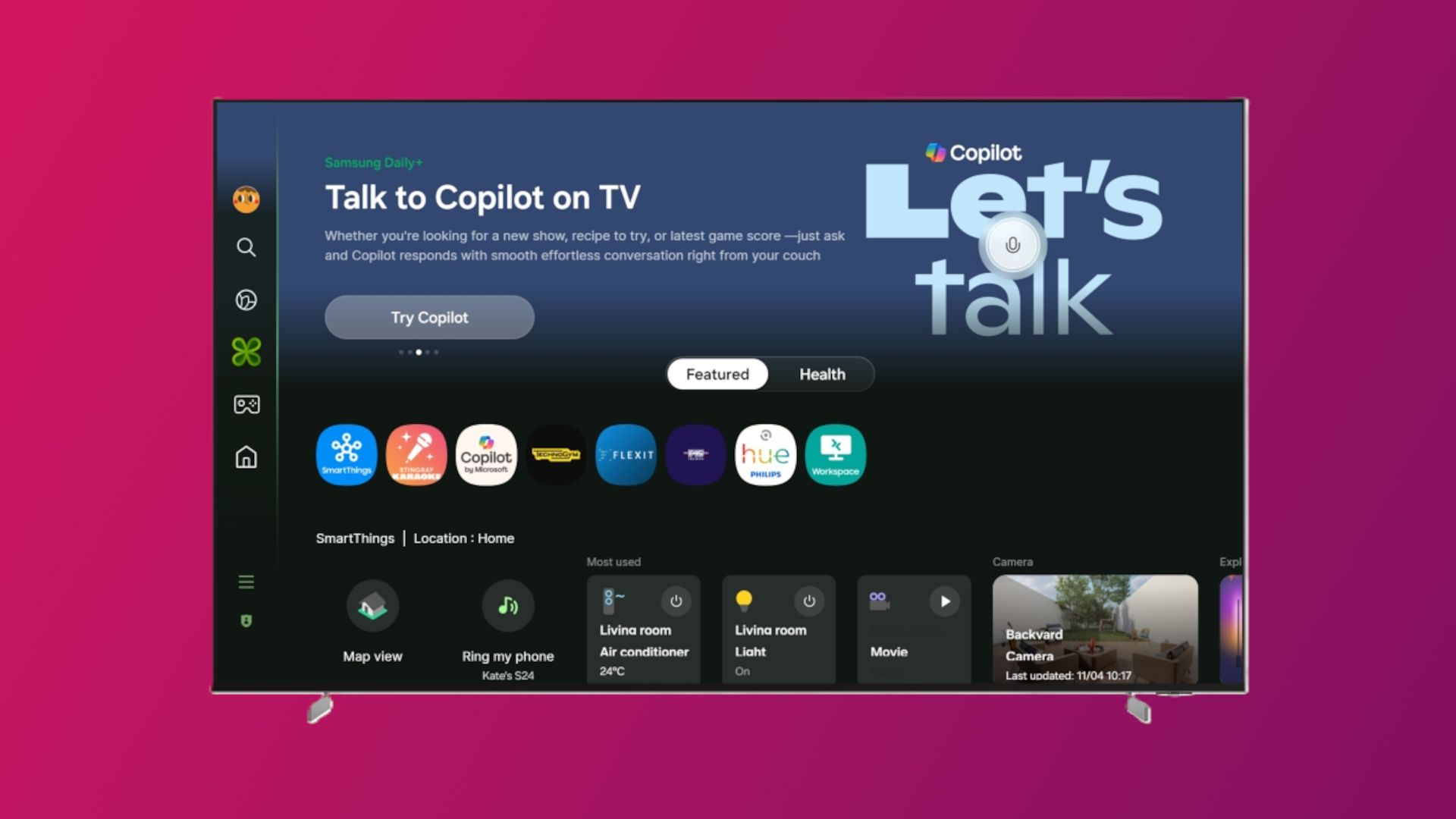
Microsoft is officially winding down support for its Copilot artificial intelligence feature on smart televisions. Users have begun receiving popup notifications on webOS-powered LG displays warning that the integration is being phased out, with the official end of support expected before the conclusion of 2026.
The Rise and Fall of TV-Based AI
Introduced as an AI-powered companion capable of answering questions, recommending movies and shows, and processing on-screen content, Copilot's presence on living room displays was short-lived. The tool had been forcibly deployed across smart TV ecosystems over the past year, sparking widespread customer pushback. For many consumers, the addition felt intrusive and unnecessary.
Your phone is literally in your hand while you watch TV but sure, let me ask my television for a recipe.
Despite the push to embed artificial intelligence into every conceivable device, consumer adoption on televisions remained exceptionally low. As one observer noted, the feature's arrival felt disconnected from how people actually use their home entertainment systems.
A Broader Strategic Shift
Beyond the lack of consumer enthusiasm, the decision reflects a fundamental pivot in Microsoft's corporate strategy. The company has steadily moved away from positioning Copilot as a personal digital assistant or casual companion, redirecting its focus firmly toward business utility and enterprise productivity use cases.
This shift became evident when Microsoft merged its consumer and enterprise versions under a unified application structure, phasing out dedicated personal applications. Because television interfaces cater almost entirely to casual media consumption rather than enterprise workflows, maintaining the application on smart TVs no longer aligned with corporate priorities.
Because they want investors to pump pump pump and it fits the narrative that AI has HUGE demand.
Critics have pointed to broader industry trends where companies rapidly integrate emerging technologies to satisfy market momentum, only to quietly scale them back when utility fails to match the hype.
What Comes Next
While exact shutdown dates vary by manufacturer and remain subject to final confirmation from Microsoft, the feature's removal marks another step in the trimming of consumer-facing AI experiments. As the technology industry recalibrates its approach to artificial intelligence, features that lack clear consumer demand or practical value are quietly heading for the exit.

