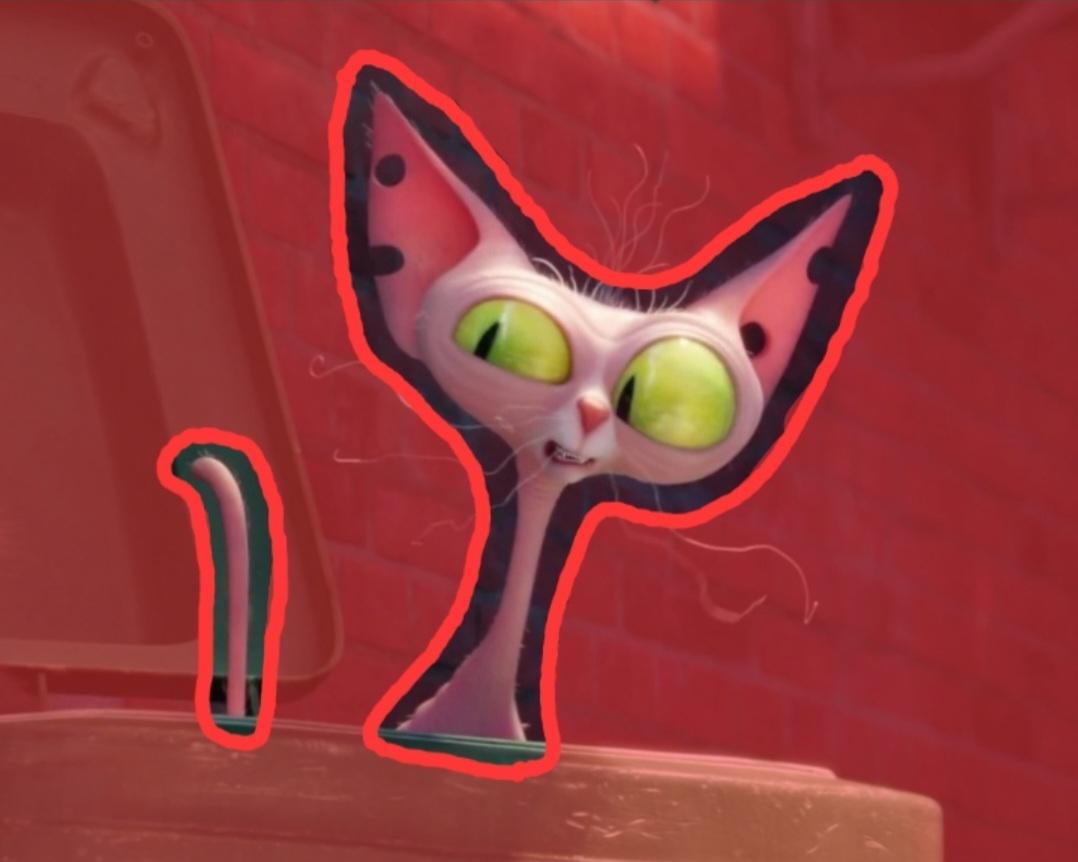
There is a persistent visual shorthand in animation and storytelling that rarely survives basic scrutiny: the hairless alley cat. When creators want to depict a tough, weathered survivor of the urban underworld or a down-on-its-luck stray, they frequently reach for a Sphynx cat, complete with its characteristic wrinkles and large ears. But from a biological and practical standpoint, placing a hairless cat in a gritty street scene creates an immediate cognitive dissonance.
A naked cat outdoors would get hypothermia from an autumn breeze in ten minutes.
Far from being cold, hardened survivors of the concrete jungle, Sphynx cats are essentially the opposite. Bred entirely through human intervention for specific aesthetic traits, they lack the natural insulation, coats, and hardiness required to withstand the elements. They require meticulous indoor care, specialized veterinary attention, and constant temperature regulation. In reality, they are deeply affectionate, domestic companions that are physically and psychologically unequipped for the rough-and-tumble lifestyle of a stray.
The Economics and Realities of the Breed
Beyond their physical vulnerability, the trope clashes with the sheer economic reality of the breed. Sphynx cats are among the most expensive feline companions available, often commanding thousands of dollars. Using one to represent a starving, destitute stray is akin to portraying a historical aristocrat as a destitute peasant.
And the funny part is that they are one of the more expensive cats. Saw them for like 2-3k they ain't cheap.
Because of this high financial investment and their extreme physical needs, owners are typically hyper-vigilant about keeping them safely indoors. The idea of a feral Sphynx population roaming the alleys is practically a logistical impossibility.
Misunderstood Stereotypes in Media
This misrepresentation often stems from a broader cultural habit of conflating appearance with morality or lifestyle. Because of their unique, hairless look, Sphynx cats are frequently cast either as wealthy, aloof villains or, conversely, as scruffy street dwellers. Yet owners and enthusiasts note that their actual temperament is overwhelmingly affectionate, curious, and gentle—little guys with none of the cold malice sometimes projected onto them.
It's funny how sphynx cats often get depicted as "scary", "thug" or "villain" in anthro stuff, when they're actually just very affectionate, kind and curious. Just little guyses.
While creators likely reach for the hairless aesthetic as a quick visual cue for edge or grit, audiences familiar with the breed are left scratching their heads. Whether intended as a nod to mange-afflicted street animals or simply an imaginative character design choice, the image of the street-smart Sphynx remains one of fiction's most amusingly inaccurate tropes.